20 November 2011

War made the state, and the state university made war

Conor comments on the situation at UC-Davis, in which police dispatched by the University's chancellor, Linda P.B. Katehi, tear-gassed peaceful demonstrators.

You can see the video here: As the authors at the Edge of the American West comment, what is most chilling is that the campus police officer "looks utterly nonchalant, for all the world as if he were hosing aphids off a rose bush. The scene bespeaks a lack of basic human empathy, an utter intolerance for dissent, or perhaps both."

Conor argues that this shows that we should not believe that institutions ameliorate violence:

None of that means, of course, that police brutality is excusable in the context of positive liberal laws like ours. We can certainly expect and demand better, even if we understand—with Hobbes—that such violence is always lurking.

Indeed, this sort of incident actually shows why Hobbes’ prescriptions don’t match his critique. Humans are just as violent when they take the reins of power. We are every bit as dangerous when wearing a police uniform as when we are outside a community of laws.

In the universe of American political thought, I would argue that there are two responses to this. The first, catalogued ably recently by Radley Balko, is the view that Conor is wrong: that we are much more dangerous when in uniform than when we are individuals. And the twentieth century supports this view quite well. Without uniforms, and the vast organizations they represent, there is no possibility of a Holocaust, of a Great Leap Forward, of a Hiroshima.

I do not imply a moral equivalence among the regimes responsible for those acts. But it is both trivially true that they could not have taken place without states (no individual or voluntary collective could carry out such mobilizations of resources) and more profoundly true that we cannot debate the moral equivalence of such acts without ascribing agency and intentionality to institutions (the "United States" launching a nuclear attack on "Japan" is more than just a shorthand for referring to the actions of certain crew members of a certain plane dropping a certain bomb on a certain town; it is also reflective of how our analytic categories constrain and permit judgment). In any case, however, it is clear that the resources of violence available to individuals within institutions are vastly, astronomically, greater than the resources for violence available to individuals outside of institutions.

The second response to Conor is to take the first response as granted and to ask why some massive institutions (Nazi Germany, Soviet Russia) are far more coercive than other massive institutions (Canada, Norway). And this is important, because the answer suggests why we find relatively modest applications of force by campus police officers against students far more shocking (or, maybe, just as shocking) as the routine application of coercion by "real" police officers elsewhere. After all, at least part of this story has to do with something that Hobbes never considered fully, and that is the issue of legitimacy--of the right to rule in the sense that Weber defined the term.

It is not the actual fact of violence that should concern us. It is the illegitimacy of that coercion. And illegitimate use of force must be met with both moral condemnation and actual signals of disapproval from the community.

Thus, it is less productive for us to discuss the general tendencies to violence of the Hobbesian state, and far more productive for us to call for the obvious: that the Regents of the University of California, Davis campus, should fire Linda P.B. Katehi, Chief of Campus Police Annette Spicuzza, and Lieutenant John Pike of the UC-Davis Campus Police immediately, for cause, and without a severance package.

11 November 2011

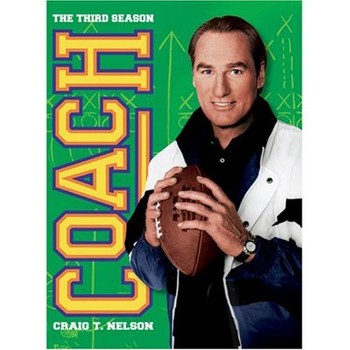
Should professors have coaches?

Really, this was a terrible show. It lasted for nine seasons.
In The New Yorker, Atul Gawande suggests professionals need coaches.

Over at Statistical Modeling, Causal Inference, and Social Science, Andrew Gelman is more skeptical. He writes:

But I don’t know if this could work for statisticians (or for physicists or computer programmers or various other technical jobs). I’m sure I could benefit from advice—if I had Don Rubin or Xiao-Li Meng or Jennifer Hill on a string to answer my statistics questions at all time, I’d be in much better shape (this is not possible so I have partitioned off areas in my brain to simulate Rubin and Meng and Hill—it’s not as good as the real thing but it actually can be helpful, sort of like those old Windows emulators they used to have on Macs)—but that sort of advice and feedback seems a bit different from coaching, somehow.

Gelman misses this one. He asks whether Gawande is "getting coached on his reporting and writing," and sets this up as a test about whether Gawande is really serious about getting feedback on his "core competency"(to add to his list of business jargon).

Let me assure that the answer is yes.

Gawande is a professional writer, but the principal difference between professional and amateur writers is that some institution has chosen to publish Gawande. That entails not merely giving him a check for the essays he writes but also imposing stringent editorial standards. And there are few magazines where that editorial intrusion is more rigorous or searching than The New Yorker.

Gelman might object that this is not quite "coaching," in the sense that it is an essential part of the process of being a magazine writer. But, actually, it is Gawande's volitional coaching--privately engaging the services of a senior surgeon to give him tips--that is the deviation from the essence of coaching. Players don't get to choose their coach, but their coach does get to choose who plays. The incentive structure is no less clear in journalism. The principal difference between the coaching he receives as a surgeon and that he receives as a writer is that in only the latter is it required. (Oddly, the field in which the professional is subject to review is not the one where his mistakes could kill.)

That underscores the difference between volitional and institutional coaching. Peers cannot criticize their peers too strongly without incurring too many costs. But a coach hired by a client who wants searching criticism can, at least in principle, say things that peers cannot. And because their relationship is based on a fee-for-service model, the coach-client relationship is, again in principle, easier to maintain than the peer-to-peer relationship. After all, you can't fire your peers, but you can fire your coach.

Churchill's secret of leadership

Churchill's wartime recollections:

All I wanted was compliance with my wishes after reasonable discussion.

Serving on University committees has made me distinctly more charitable to this point of view.

10 November 2011

You are a little blog bearing up a corpse

(Those among you who are fans of Epictetus will get the reference.)

A delayed shout-out to a great new blog dealing with Stoicism, philosophy, and modernity. Applied Stoicism ought to be more popular than it is.

It's a good day ... for data science!

Despite the lab coat, he's more of an engineer than a scientist.
Kaiser Fung recounts three hours in the day of the life of a "data scientist." The post triggers a few observations.

First, what Fung doesn't mention is that this is actually fun. Screwing around with computers is a perfect example of nonwork, in that it is labor-intensive enough to feel like you're being productive while having no actual value added. (Much like blogging!) But unlike much nonwork (in the real world, examples include answering the phone, answering emails, going to meetings, and so forth), writing code is like solving a whole bunch of logic puzzles all at once. And the frequently (apparently) arbitrary relationship between success and effort makes you feel like a lab rat in one of those experiments that prove that random rewards are more successful at generating effort than rules-based ones.

Second, the term "data scientist"is a little misleading. Just as most mad scientists are actually mad engineers, so too are most data scientists really data engineers, at least day-by-day. (There's nothing wrong with that; engineers get things to work! The software engineers who built Google's search functions are praiseworthy!) But note what Kaiser is doing: he's moving data from X to Y. No hypo testing, just problem-solving.

Third, I'm again reminded of the difference in practice between the life of quants, quals, and squishes. (In classic social science tradition, I'm breaking up the dialectic and calling this progress.) Quants spend their time wrestling with datasets, which is often way harder than quals or squishes believe. Quals spend their time wrestling with cases, which is often much harder than quants or squishes admit. And squishes spend their time figuring out the substrate of reality, which confuse quants and quals who simply assume that problem away.

But at the end of the day, the quant approach is actually more collaborative than quals or squishes admit, and the qual/squish approach is more solitary. Because so many quant problems are engineering in nature, two (or more) heads are better than one--and once a given problem is cracked, the answer is open to everyone immediately. But squishes and quals have to rely on a lot of tacit knowledge. It's very easy for me to consult with someone on a Stata problem. It's very, very hard for me to consult even on a qual topic I know well, like the Nixon administration.

09 November 2011

Using "reshape" to generate country-year data in Stata

The other day, I observed a colleague creating a country-year dataset by hand--using Excel to type out a list of countries and then manually add years. It took her eight or ten hours.

This is a little inefficient.

So I thought I'd give a very quick tutorial in how to do this in 10 seconds.

First, open Stata and create a new file. (For convenience, I'll refer to this as "country.dta".)

Create one new variable, called "country."

Populate this with some arbitrary number of country names--"Belgium","France","Germany", whatever. Since this is an example, four or five will be fine.

Next, create some number of years, like so:

gen year1960=1960
gen year1961=1961
gen year1962=1962


You should now have four variables--"country", "year1960", "year1961", and "year1962"--of which the latter three should be identical. To see your data, type

browse

Now, type

reshape long year, i(country)
drop _j


Once again, type


browse


to see your data.


You'll see that you now have your data arrayed in country-year format. 


This is a toy example, but it's got obvious advantages. For more on the tools that went into this, see the UCLA computing site or type 


help reshape


from the Stata command line.

08 September 2011

An Awe

Among the traits characteristic of the historical line of research begun during the 1930s by the Annales school, reference to statistical objectifications has been significant. From this point of view quantitative history has inherited, via Simiand, Halbwachs, and Labrousse, elements of the Durkheimian school and, even closer to the source, of the mode of thinking centered on averages engendered by Quetelet, who opposed macrosocial regularities to the random, unpredictable, and always different accidents of particular events. It sought, by this technique, to overcome individual or factual contingencies in order to construct more general things, characterizing social groups or the long run, depending on the case. This attempt to give form to the chaos of countless singular observations involves having recourse to previous sources or to specific encodings, of which historians ask two questions: Are they available? Are they reliable? In this perspective, the question of the reality and consistency of objects is assimilated to the question of the reliability of their measurements. The cognitive tools of generalization are presumed to have been acquired and firmly constituted. All that matters is the controlled collection and the technical treatment--eventually automated--of the data.
--The Politics of Large Numbers: A History of Statistical Reasoning, Alain Desrosieres, trans. Camille Naish, Harvard UP, 1998, p. 323.

12 August 2011

Number One for 12 August 2011

The FCC won't let me be me:

05 August 2011

03 August 2011

Debt and blockbusters

Summer is a time for blockbuster movies--sprawling, spectacular, and
illogical monuments to excess. This summer, the most successful disaster
film hasn't been a Hollywood creation has been the Countdown to the
Default.

The imaginary apocalypses now playing the multiplex pale next to the
consequences of America's impending defaults, downgrades, or some
combination of the two. (Sure, evil transforming robots might wreck
Chicago, but a default would have wrecked my retirement portfolio.)

Ironically, the national debt played a supporting role in one of the
summer's biggest movies, Captain America. The movie shows the journey of
Steve Rogers, a good-hearted Boy Scout type who wants to defend the world
against the bad guys, from 98-pound weakling to world-saving superhero.

But Captain America's first assignment isn't punching Hitler in the jaw.
It's traveling across the country selling war bonds. In other words, in
today's debate over the national debt, Captain America would be foursquare
for spending more money than the government earns.

What's more, he would be part of a proud pro-debt tradition. Contrary to
Tea Party slogans, the debt has been a central tool for uniting Americans
for most of U.S. history. Buying debt has even been seen as a patriotic
duty.

Forget the wonk-centered debate over the extent to which American
policymakers have abandoned--or ever adopted--Keynesian ideas. The national
debt has been an essential part of the American experience ever since 1790,
when Alexander Hamilton made a deal with Thomas Jefferson and James Madison
to swap the location of the national capital for the federal government's
assumption of state debts (what we would today call a "bailout").

The resulting bargain ensured both that the capital would be located in the
South instead of the commercial, cosmopolitan, and (the South feared)
abolitionist North and that the federal government would play a major role
in the nation's financial markets.

The creation of the debt thus insured the future of the Union by binding
both Southerners and Northerners to the federal government. Subsequent uses
have been just as calculated: the Civil War was paid for by a mix of
taxation, inflation, and debt sales, as was American involvement in both
World Wars and the defense buildup that helped the United States win the
Cold War.

In every case, policymakers calculated that taking on massive amounts of
debt was in the national interest--and voters agreed. Voters not only
returned the politicians who voted for that spending to office, they turned
out in droves to buy bonds in order to support deficit spending.

Captain America's bond salesmanship was fictional, but real-life bond sales
drives featured Bette Davis and Rita Hayworth. Irving Berlin even wrote a
theme song for bond sales performed by Bugs Bunny ("Here comes the freedom
man/Asking you to buy a share of freedom today").

For most of their history, in other words, Americans have managed to stop
worrying and love the debt. That's not a part of the nation's history that
John Boehner, Eric Cantor, or the Tea Party's members care to remember.
They instead claim that the debt is the result of out-of-control Washington
spending.

And they're right. Unlike earlier generations' deficit spending, the
contemporary national debt wasn't incurred to beat the Nazis or save the
Union. It's the result of decisions taken in President George W. Bush's
first term to slash taxes on the wealthy without cutting spending
elsewhere--and then to embark on costly nation-building projects without
raising taxes to pay for them.

For all their righteous anger about the debt, then, the pro-default crowd
misses the point. The problem isn't the size of the national debt. Instead,
it's the purposes for which it was spent and the ability of the government
to raise the revenue to pay for the money that it has already spent.

A default on the debt would signal the end of an unbroken American
tradition of faithful repayment. Doing the right thing now requires a
steadfat mix of spending cuts and tax increases. That would be a dull
ending to the high-stakes negotiations, but real life isn't a  movie, and
sometimes boring endings are the best kind.